 Intro price. Get OCP Courses for Big Sale -70% off.

From Classroom to Company: How CIMAGE Students Built Real Brands with AI and Digital Marketing
Hundreds of young people walked in as students. They walked out having built companies, brands, websites, content and campaigns of their own.
Table of Contents
On the first afternoon, the hall at CIMAGE Digital Tower carried the particular kind of silence that appears just before something meaningful begins. Hundreds of students in crisp white uniforms filed in with fresh notebooks, swinging lanyards and uncertain expectations.
They had arrived for an AI and digital marketing workshop. What they did not yet know was that they would spend the week behaving less like students and more like founders. That was the promise made by Dr. Pranjal Singh, Founder and Director of OCP Academy, when he took the microphone.
"This is not a lecture. This is a startup incubator."
Pranjal Tweet
Over six intensive training sessions, the promise became real. Students researched customers, created businesses, trained AI systems, developed brand identities, built websites, published content, planned campaigns and presented their ideas with a founder’s conviction
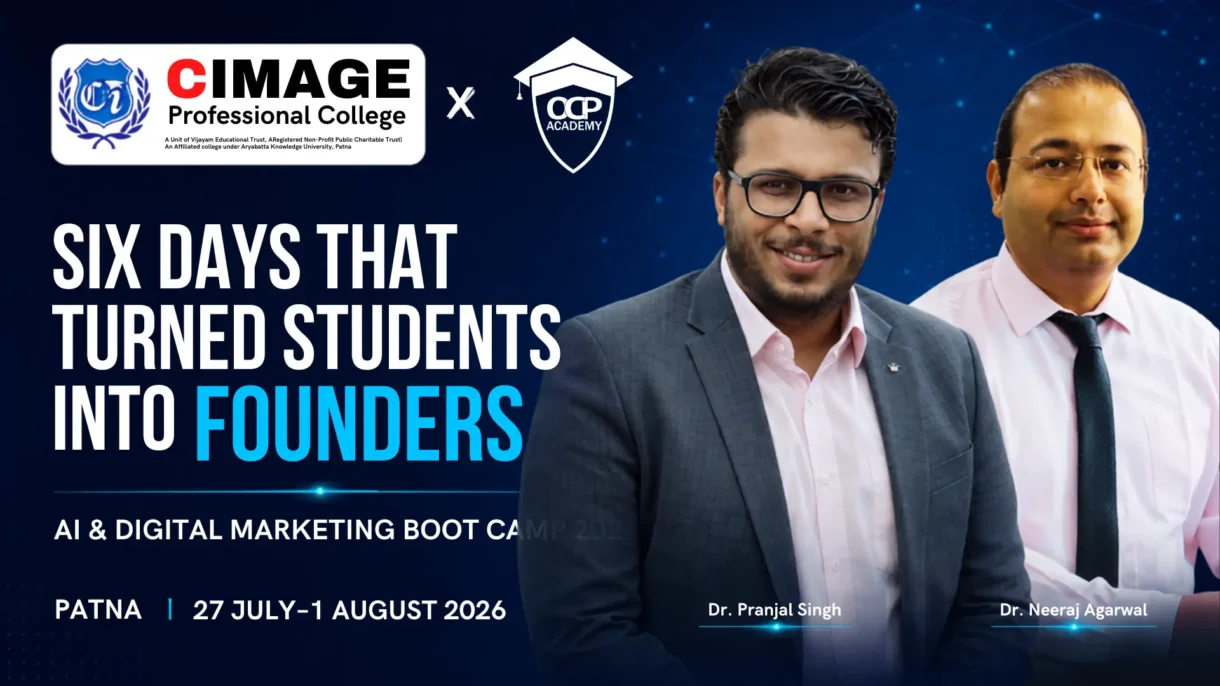
The AI & Digital Marketing Boot Camp 2026 was conducted by CIMAGE Group of Institutions in collaboration with OCP Academy at CIMAGE Digital Tower, Patna, from 27 July to 1 August 2026. Led by Dr. Pranjal Singh, the programme replaced passive classroom learning with a simple expectation: learn a concept, apply it immediately and produce something real.
❤️ 6 Days. 600+ Students. Countless Memories.
What started as an AI & Digital Marketing Boot Camp became so much more than a workshop.
Over the past six days, we didn’t just teach AI tools or Digital Marketing—we learned together, built together, solved real business challenges, and created memories that we’ll always cherish.
Watching hundreds of students transform ideas into brands, collaborate as teams, and embrace the future with curiosity and confidence has been one of the most rewarding experiences for all of us at OCP Academy.
A heartfelt thank you to CIMAGE Group of Institutions for believing in practical, industry-oriented education and providing us with this incredible platform.
Day One: The Day Every Team Started a Company
The programme opened with a ceremonial lamp-lighting in the presence of CIMAGE management and faculty. Soon afterwards, the students encountered the first idea that would guide the entire week:
Marketing is not merely what a business says about itself. A brand is shaped by what people think, feel and say after experiencing it.
Pranjal Tweet
Students were organised into teams of six to eight and assigned practical roles, including Brand Lead, AI Builder, Content Strategist, Growth Lead, Research Analyst, Creative Lead and Data Lead. Each member had responsibility; nobody was expected to remain a spectator.
Every team then selected one real, manageable business. They were discouraged from choosing enormous brands such as Apple, Tata or Amazon. Instead, they explored businesses they could understand closely: a kurta shop in Kankarbagh, a coaching institute in Boring Road, a neighbourhood gym, a salon, a clinic, a homemade-food venture or an original startup idea.
The reason was practical. Students could research a small business, speak to its potential customers and recommend improvements grounded in local reality. They could not produce meaningful original work for a global corporation with an established marketing department.
The teams learned the complete marketing journey, beginning with research and moving through product creation, awareness, promotion, positioning, advertising, offers, sales, public relations and feedback. Primary research required them to speak to real people. Secondary research required competitor study, price comparison and analysis of customer reviews.
Case studies made the concepts memorable. Nirma demonstrated how price, audience and positioning must remain aligned. McDonald’s showed why a global business must listen to local culture rather than assume that one model will work everywhere.
By the close of Day One, each team had a company name, a target customer, an early positioning idea and an original tagline. Ideas that had entered the room as scattered possibilities had begun taking the shape of businesses.
Day Two: Building an Entire Business With AI
If Day One gave every team a company, Day Two gave them a new way to build it. Dr. Singh introduced AI as a business partner rather than a magic button. The central lesson was direct:
"AI is like a blank piece of paper. It becomes powerful only when you train it with context, clarity and direction."
Pranjal Tweet
Students learned that a vague prompt produces generic output, while a trained prompt – supported by information about the business, audience, problem, tone and objective – can produce work that is useful, relevant and original.
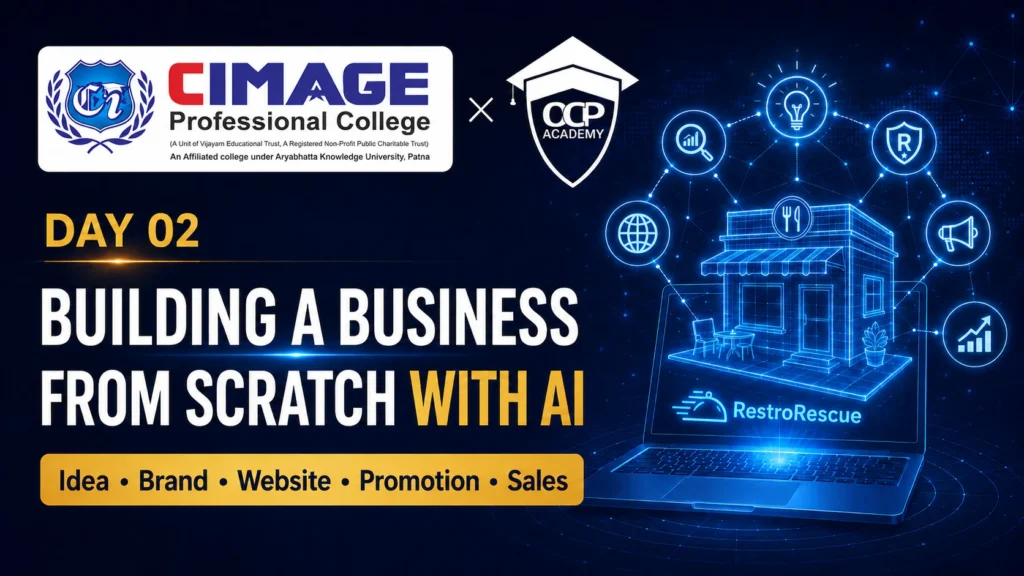
The principle was demonstrated live through RestroRescue, a student-inspired business concept developed into a complete brand during the session.
RestroRescue was imagined as a verified network that could help restaurants fulfil orders for dishes they had temporarily run out of. It could also help kitchens use spare capacity and reduce the waste of safe, fresh surplus food. A cancelled restaurant order was reframed as an opportunity: one kitchen’s shortage could become another kitchen’s business.
In a single afternoon, the idea moved through the business-building process. Students watched as AI supported:
Customer and competitor research
Business positioning and naming
Logo and visual-identity development
Brand colours, voice and messaging
Posters and social-media creatives
Website copy and a bilingual website
A short promotional film
A Hindi-English brand jingle
Pricing ideas, launch offers and sales scripts
Public-relations messaging and a launch roadmap
The goal was not to show how many AI tools could be opened. It was to demonstrate how several tools could work together when guided by a trained human mind.
Day Two also carried an important lesson in responsible AI. When an AI-generated creative produced a face resembling a well-known chef, Dr. Singh stopped the process and refused to use the image. Students were told that easy generation does not create ethical permission. A celebrity’s face, voice or intentional likeness should not be used without proper authorisation.
That moment made the professional standard clear: knowing what AI can create is useful; knowing what should not be used is essential.
By the end of the session, each team had started building its own brand kit, using the same process demonstrated through RestroRescue. The uncertainty visible on the first day had begun turning into possibility.
Day Three: Understanding the Technology Behind the Tools
The third session became the hinge of the boot camp. Instead of racing towards another tool, the programme slowed down so that earlier learning could become stronger.
"Revision is not a step backward. It is what makes everything after it stick."
Pranjal Tweet
Students revisited the foundations of marketing, branding, AI-assisted creation and business development. They then moved into emerging technologies, including augmented reality, virtual reality, mixed reality and extended reality.
The session also introduced the changing nature of search. Students explored the difference between traditional search engines, answer engines and generative search experiences. Concepts such as Answer Engine Optimization (AEO) and Generative Engine Optimization (GEO) helped them understand why digital content must now be useful not only to human readers and conventional search engines, but also to AI-powered discovery systems.
The differences between artificial intelligence, synthetic intelligence and automation were also discussed. The objective was not to encourage students to chase every fashionable term. It was to help them recognise what each technology does, where it is useful and where human judgement remains necessary.
By the end of the day, students were not simply operating tools. They were beginning to understand the systems, decisions and responsibilities behind them.
Day Four: The Unexpected Session That Turned Ideas Into Visual Campaigns
According to the original schedule, there was not going to be a classroom session on 30 July. Polling for the Bankipur Assembly by-election was being held in Patna that day, so the date had initially been kept free.
Then, at around 8:00 PM on the previous evening, the plan changed. A call came from Dr. Neeraj Agarwal, confirming that the teams would return on 30 July for an additional practical session.
What could have remained a gap in the calendar became one of the most production-focused days of the entire boot camp.
The special session focused on AI-powered graphic design, video editing and content production. Students learned how to translate a business idea into promotional material that could capture attention, explain value and encourage action. They explored the complete process of creating posters, videos and platform-ready content rather than treating design as a decorative afterthought.
Students worked through:
Creating professional posters and social-media creatives with AI
Selecting brand colours, typography, visual hierarchy and layouts
Writing headlines, hooks, captions and calls to action
Developing video concepts, scripts, scenes and storyboards
Generating and editing promotional videos using AI tools
Adding voiceovers, music, subtitles and brand elements
Adapting one creative idea for different digital platforms
Turning product benefits into promotional and advertising messages
Connecting brand promotion with offers, sales and customer action
Creating multiple content variations without losing brand consistency
The class also clarified the differences among promotion, advertising, brand promotion, sales communication and offers. Promotion creates interest around a business. Advertising pays to place a message before a selected audience. Brand promotion builds recognition and trust over time. Offers give customers a reason to act, while sales communication helps convert that interest into a decision.
Students applied these distinctions to the same companies they had been developing since Day One. Every poster, video and piece of content therefore had a clear business purpose, a defined audience and a measurable call to action.
The sudden addition to the schedule carried a larger lesson: real marketing rarely unfolds exactly according to plan. Deadlines move, opportunities appear without warning and professionals must be ready to create under pressure. On 30 July, the teams did precisely that.
Day Five: Giving Every Brand a Voice and Making It Discoverable
When the teams returned, the work moved from building a brand to communicating it.
Students learned the AIDA framework – Attention, Interest, Desire and Action – and applied it across different platforms. They explored SWOT analysis, email marketing and platform-specific communication, learning why the same brand should not repeat the same message in the same way everywhere.
Instagram, LinkedIn and WhatsApp may serve the same organisation, but each platform carries a different audience expectation, content style and purpose. Teams learned to adapt their central message without losing their brand identity.
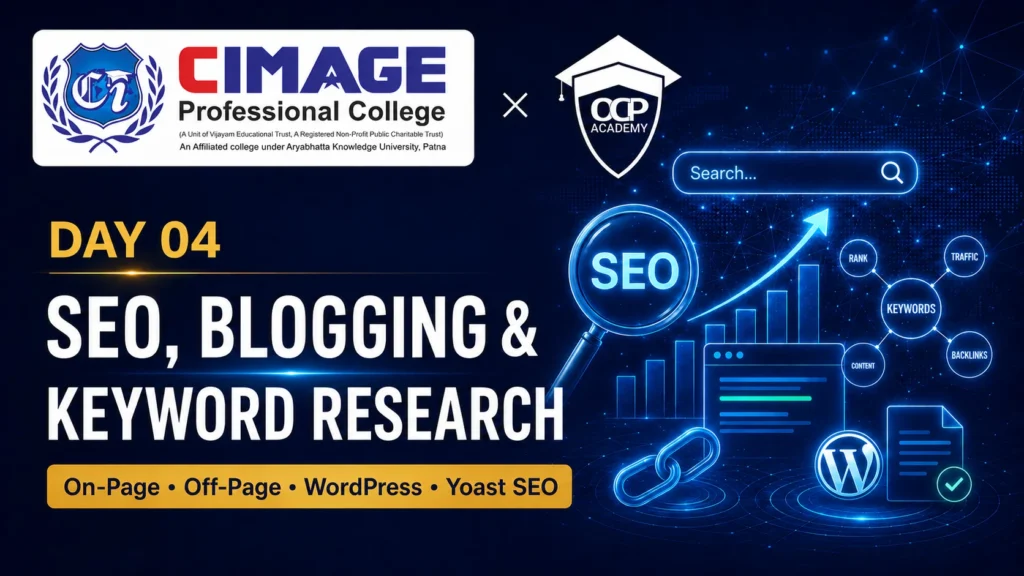
The session then moved into one of the most important employability skills in digital marketing: Search Engine Optimization.
Students worked through:
How search engines discover, understand and rank pages
The difference between on-page, off-page and technical SEO
How search intent influences keyword selection
How to use short-tail, mid-tail and long-tail keywords
How to select and use a focus keyphrase
How to structure a blog with a title, introduction, headings, conclusion and call to action
How to write meta titles, meta descriptions and clean URL slugs
How to optimise featured images, filenames and alt text
How to publish using WordPress, Elementor and Yoast SEO
How to promote content ethically through off-page channels
The learning was not restricted to slides. Students watched a real article being developed, optimised, published and promoted using OCP Academy’s live website as the working case study: SEO to Synthetic Intelligence: How AI, Automation and Immersive Technology Will Shape Digital Marketing Careers.
The central message of the session was simple:
SEO is not a trick performed on Google. It is a service offered to a real person who is searching for a useful answer.
Pranjal Tweet
Students saw that blogging is not merely writing. Effective search content combines research, intent, structure, accuracy, images, technical implementation and responsible promotion.
Day Six: Performance Marketing and the Founder Pitch
The final session connected everything the teams had created with the commercial discipline of performance marketing.
Students explored how businesses can buy attention, track results and improve campaigns through evidence rather than assumption. They learned how campaign objectives connect with different stages of the customer journey and how a marketer decides whether to prioritise awareness, traffic, engagement, leads, app promotion or sales.
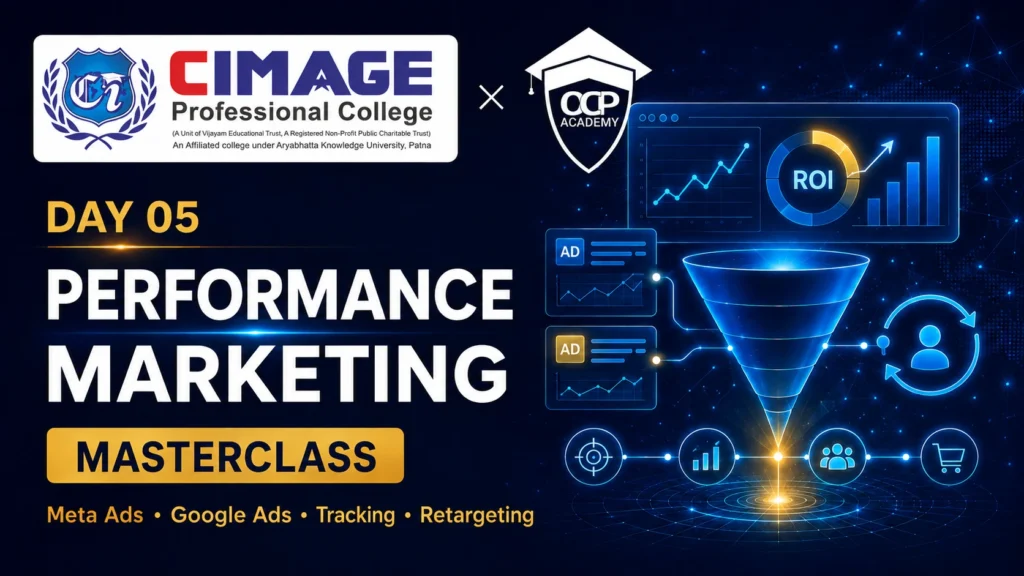
The masterclass covered:
Meta Ads campaign structure
Core, custom and lookalike audiences
Retargeting sequences
Google Search, Display, YouTube and Performance Max campaigns
Meta Pixel, Conversion API and Google Tag Manager
Google Analytics 4 conversions
Keyword selection and negative keywords
Advertising copy and creative variations
Attribution, testing, budgeting and optimisation
CTR, CPC, CPM, CPL, CPA, ROAS and ROI
Students learned that running an advertisement is only the beginning. A performance marketer must understand what happened after the advertisement was shown, diagnose weak results and decide what to improve.
"Performance marketing is not about spending more money. It is about learning faster, measuring correctly and making better decisions."
Pranjal Tweet
The week culminated in team presentations. Businesses that had begun as nervous notes on Day One were presented as developed brands with names, positioning, logos, websites, content and campaign ideas. Students stood before the room not merely to repeat definitions, but to explain and defend decisions they had made themselves.
Certificates were presented, photographs were taken and the hall celebrated the visible work. Yet the most important outcome was harder to fit into a frame: students had discovered that they were capable of turning an idea into something structured, communicable and commercially meaningful.
A Competition Built Around Real Career Assets
A practical competition ran alongside the programme. Teams shared evidence of their progress throughout the boot camp:
Day One: team photograph, brand name and tagline
Day Two: logo, poster and AI-generated jingle
Day Three: live website and published blog
Day Four: AI-designed posters, videos and promotional content
Day Five: AIDA-based messaging adapted across three platforms
Day Six: campaign and final pitch
The competition was deliberately based on 100% organic engagement. Paid boosting, purchased followers, artificial likes, engagement groups and other shortcuts were prohibited. Teams were expected to create work that earned real attention and to submit insight screenshots for verification.
Following a principle proposed by CIMAGE Director Dr. Neeraj Agarwal, the rewards were designed as career assets rather than cash prizes. The announced opportunities included trophies and certificates, a LinkedIn recommendation from Dr. Pranjal Singh, recommendation letters, professional headshots and reels, career guidance, industrial exposure, featured posts and vouchers.
The competition results are scheduled to be announced on 30 August 2026.
The structure reinforced a lesson that ran through the entire boot camp: professional success is not built through shortcuts. It is built through skill, consistency, credible work and the ability to show what you have created.
About the AI & Digital Marketing Boot Camp 2026
Six days earlier, the participants had entered as students studying business, technology and marketing. They left having experienced the work behind those words.
They had:
Identified a real customer problem
Founded and structured a team company
Conducted primary and secondary research
Named and positioned a brand
Trained AI with business context
Created visual and verbal brand assets
Built a website without traditional coding
Written and published digital content
Learned SEO, AEO and GEO fundamentals
Adapted messaging across social platforms
Planned paid-media campaigns
Used marketing metrics to support decisions
This was the deeper purpose of the AI & Digital Marketing Boot Camp 2026: not to make students memorise tools, but to make them use tools to think, create, collaborate and deliver.
AI can make production faster. Digital platforms can make communication wider. Data can make decisions more measurable. But none of these can replace curiosity, responsibility, judgement and the courage to begin.
As Dr. Pranjal Singh reminded the students at the close:
"The best time to start was yesterday. The next best time is now."
Pranjal Tweet
For hundreds of students in Patna, “now” had already begun
What Students Carried Out of the Door
The six-day AI & Digital Marketing Boot Camp 2026 was conducted by CIMAGE Group of Institutions in collaboration with OCP Academy at CIMAGE Digital Tower, Patna, from 27 July to 1 August 2026. The programme was led by Dr. Pranjal Singh, Founder and Director of OCP Academy, and focused on practical business building, AI, graphic design, video production, branding, content, SEO, social media and performance marketing.
To explore practical, mentor-led programmes in AI, digital marketing, analytics and strategy, visit OCP Academy or explore its premium digital marketing programmes
Frequently Asked Questions
It was a practical business-building and marketing programme in which student teams selected a real business idea and developed its research, brand identity, website, content, SEO strategy and advertising campaign.
It was conducted at CIMAGE Digital Tower in Patna from 27 July to 1 August 2026. Although 30 July was initially kept free because of the Bankipur Assembly by-election, an additional live session was confirmed by Dr. Neeraj Agarwal the previous evening. The programme therefore included six instructor-led training days.
The programme was led by Dr. Pranjal Singh, Founder and Director of OCP Academy, in collaboration with CIMAGE Group of Institutions.
Student teams created business concepts, customer research, brand names, taglines, logos, posters, AI jingles, promotional content, websites, blogs, social-media messages and performance-marketing campaign plans.
The programme covered marketing research, branding, AI prompting, responsible AI, AI-powered graphic design, video editing, poster creation, content production, email marketing, social-media strategy, SEO, AEO, GEO, WordPress publishing, Meta Ads, Google Ads, tracking, retargeting, analytics and campaign measurement.
No. Every major concept was followed by a practical activity connected to the same company selected by each team. Students produced and presented real work throughout the programme.
“Don’t say, ‘I’ll try.’ Decide—either do it with complete commitment or don’t do it at all. Success begins when hesitation ends and action starts.”
Popular Reels


Post Popular Post.
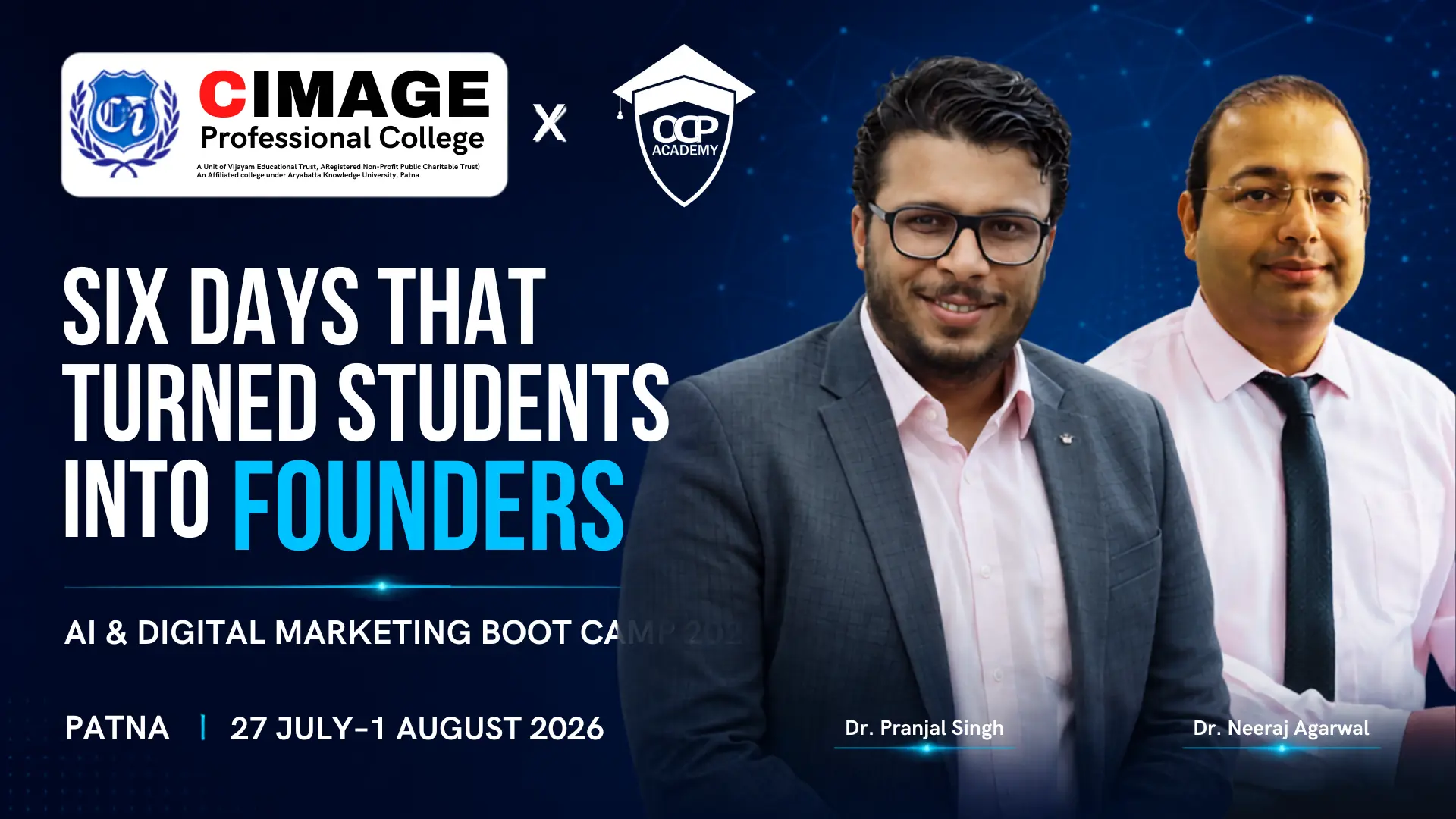
Six Days That Turned Students Into Founders: Inside the AI
Hundreds of students entered CIMAGE Digital Tower as learners and
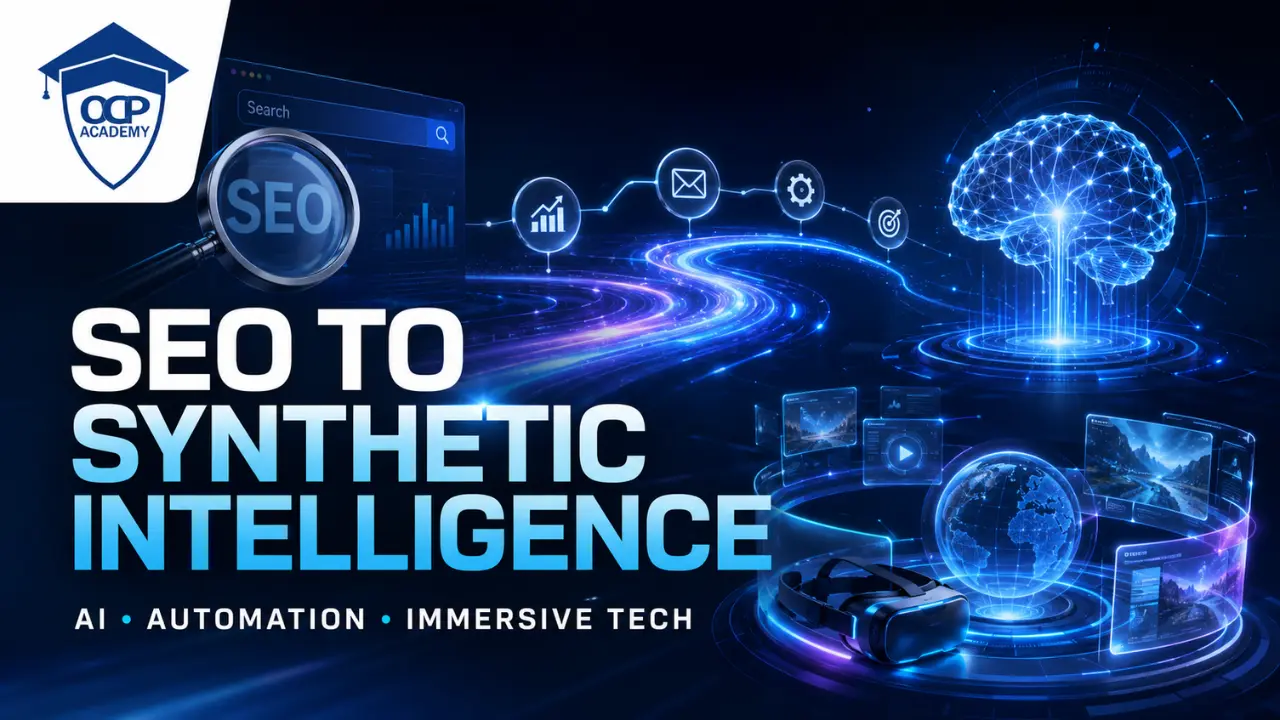
SEO to Synthetic Intelligence: How AI, Automation and Immersive Technology
Discover how SEO, AI, automation, Synthetic Intelligence and immersive technologies
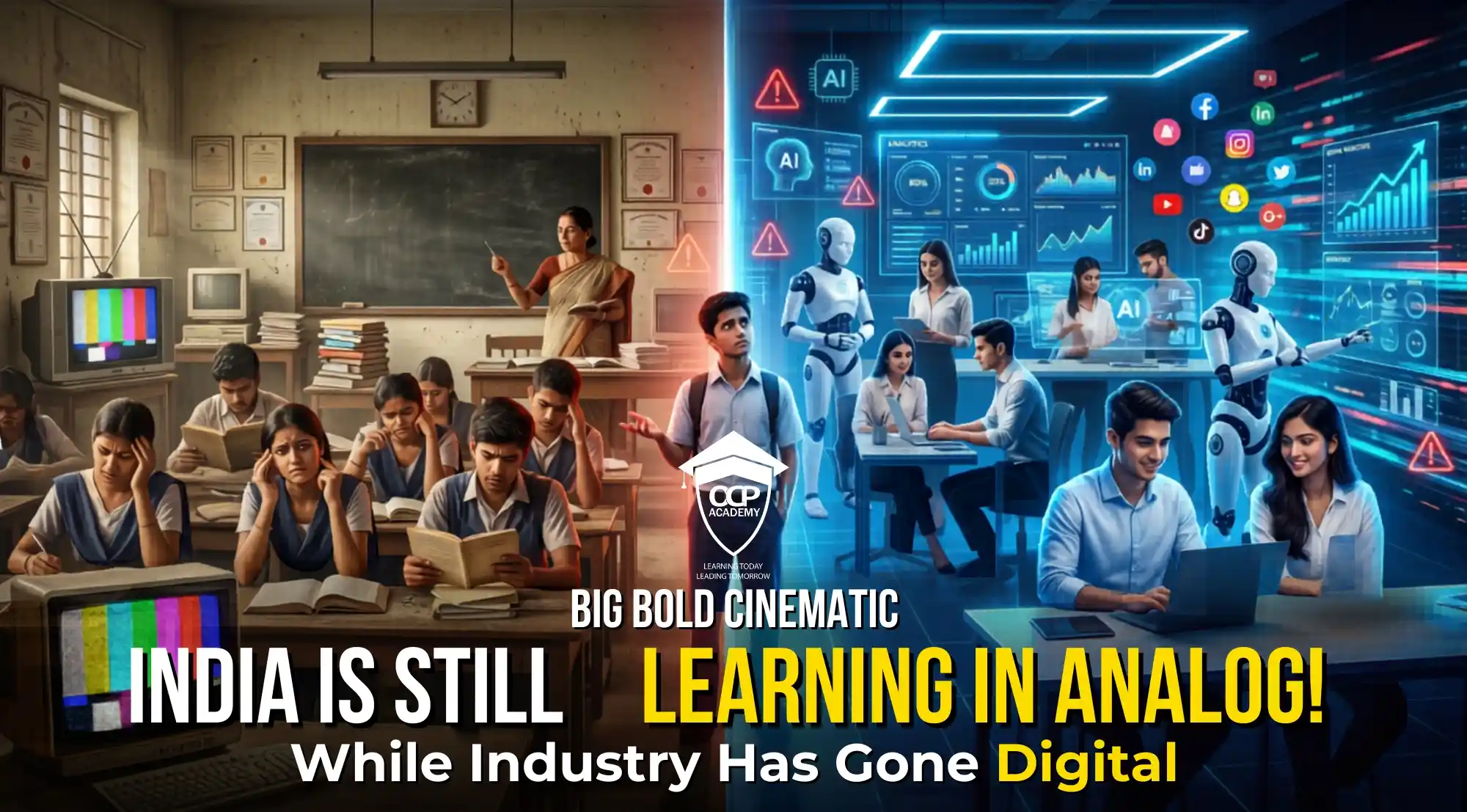
India’s Education System Is Still Analog While the Industry Has
India’s industries are rapidly adopting AI, automation, and digital technologies,